
Cook Allender is a Nashville-based rock artist delivering unapologetic, guitar-driven songs fueled by a lifelong love of ’90s alternative rock.
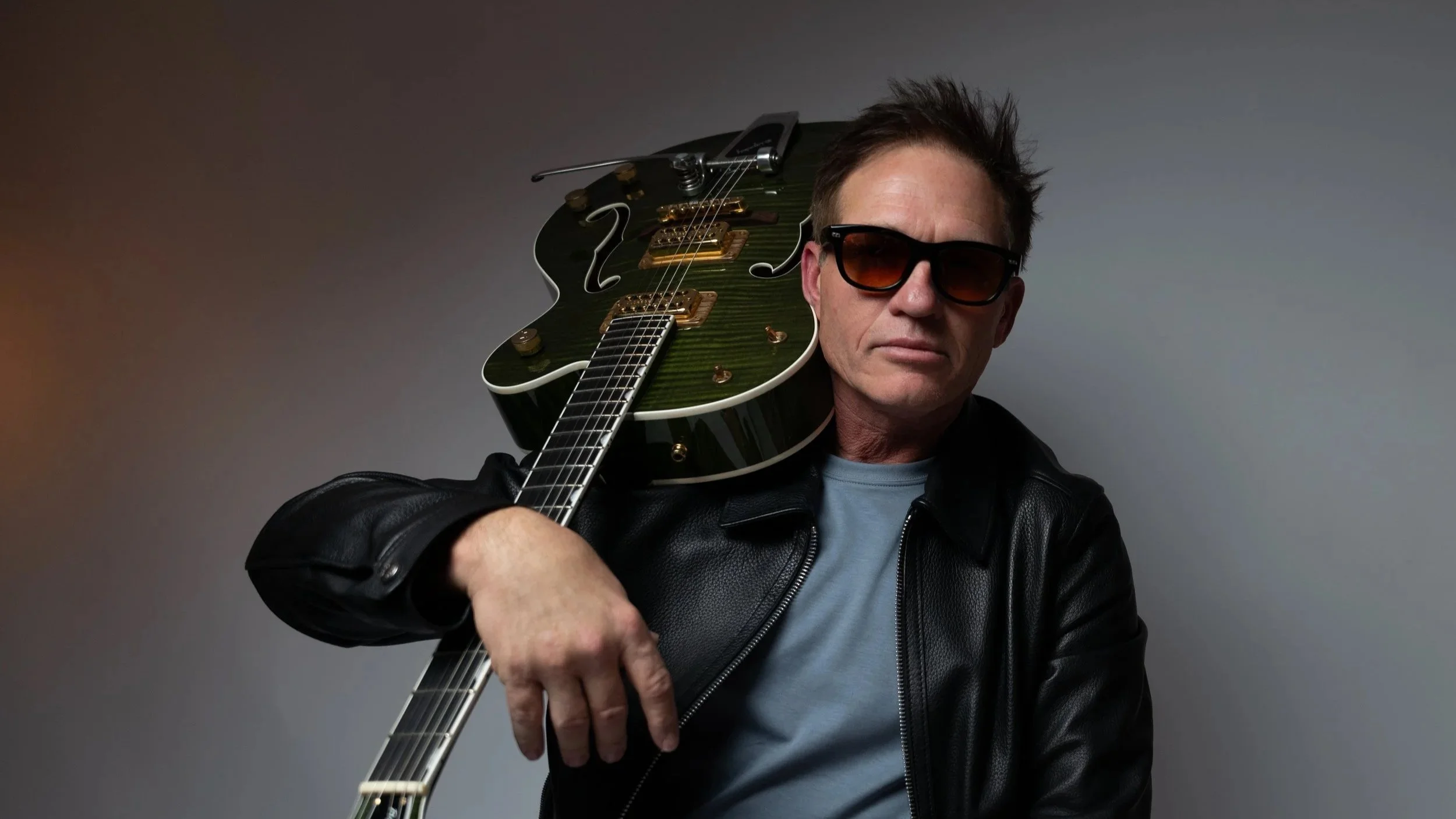
Cook Allender didn’t set out to become a late-breaking rock artist—but life has a way of circling you back to the thing you were born to do. Long before he released his debut album, Music Your Parents Hate, Allender was a 7-year-old kid in New Orleans who picked up a baritone ukulele from his parents’ garage and immediately began writing his own songs. He never learned covers. He didn’t need to.
“I just started creating from day one,” he says. “It was instinctive. It felt like my thing.”
The people around him didn’t see music as a viable path. His family discouraged it, pushing him toward safer choices, steadier paychecks, and a more predictable life.
“They were dead set against me being a musician,” he says. “I think they saw something in me they didn’t really want to revisit.”
So he tried to follow the plan—tried to do what he thought would make everyone comfortable. He went to the University of Tennessee instead of music school. He earned a license and worked in finance. He waited tables. He joined the military. He spent years in the movie industry, becoming a still photographer who worked on dozens of major motion pictures including Mr. Right (Sam Rockwell, Anna Kendrick) and Benji (2018). He was good at all of it. But none of it felt like home.
That chapter of his life left an imprint he didn’t fully recognize until much later. Working behind the camera taught him pacing, tension, composition, and how to tell an entire story in a single frame. That artistic eye and understanding would eventually bleed into his songwriting, giving his music an unusually cinematic feel.
“Learning how to capture art on film made me a better composer,” he says. “I could hear a song and immediately see the scene around it. That changed everything about how I write,” he says. “My film and photography experience flows through how I approach my music – it’s all about the story; everything has layers and I love exploring all of that on this album.”
Through it all, music remained the undertow—pulling quietly, steadily, even when he resisted.
“I’ve always been a guitar player,” Allender says. “I’ve always written riffs. But I never considered myself a singer. That was the piece I didn’t think I had.”
Then one night, a simple conversation shifted everything. He was playing acoustic guitar when a friend told him point-blank he should write his own songs and stop assuming he couldn’t sing. He brushed it off—until he started watching a documentary about Metallica’s writing process. They began with riffs. They hummed nonsense melodies. Words came last.
“It clicked,” he says. “I thought, ‘Wait—that’s what I do. I can do this.’ And so I did. I just didn’t stop.”
That turned into six years of relentless private work—writing, rewriting, experimenting, shaping the sound he didn’t know he’d been chasing his whole life. What emerged was a fierce, melodic, unapologetically guitar-forward brand of rock that nods to the giants of the ’90s while refusing to imitate them.
“If Led Zeppelin and Stone Temple Pilots had a Foo Fighting baby—that’s my music,” he says with a laugh. “That’s the quickest way to describe it.”
When early listeners began telling him his songs sounded like they would have been massive in the ’90s, he didn’t take it as an insult—but as validation.
“It made me feel like I’m going in the right direction,” he says. “This is what I know, what I feel. And I like the music I made. That matters.”
His debut album, Music Your Parents Hate, embraces that spirit wholeheartedly. The title is playful, winking at the generational push-and-pull that has always powered rock & roll. But there’s a deeper creative purpose:
“Rebellion used to be fun,” Allender says. “It used to mean blasting music, driving too fast, singing at the top of your lungs. The world is so serious now. I wanted to bring back the fun side of rebellion.”
Though the music is loud, confident, and full of swagger, the man behind it carries a surprising humility. He’s waited his entire life to make this record—and he can feel that weight in his chest.
“It gives me goosebumps,” he admits. “This doesn’t feel foreign to me. It feels like it was supposed to happen. If I go to my grave tomorrow, I can say I gave it everything.”
There’s another layer to Allender’s mission—one that’s as heartfelt as the music. A portion of revenue from the project will support no-kill animal shelters, inspired partly by a moment that stayed with him. When his dog, Max, needed double ACL surgery, Allender sat in a waiting room next to a man who quietly put an $8,000 surgery on a credit card.
“You could tell he was horrified and relieved at the same time,” he says. “But he did it because he loved his dog. That stuck with me. That man’s love and sacrifice for his pup stuck with me.”
His support for shelters is both emotional and practical: “Every animal should get a chance,” he says. “If the music can help even a little, that’s worth everything.”
Now based in Nashville, Allender is fully committed to the path he once believed he’d missed. The album is only the beginning—his second record is already nearly finished. And while he jokes about being “too old to take himself too seriously,” the truth is simpler: he’s having the time of his life.
“When people hear my music,” he says, “I want them to know I’m having a blast and I want them to have a blast. I’m doing what I love. And if that inspires one person to take a chance on their own dream—even better.”
